













Blue Light Therapy Devices: What They Are, How They Work, and Where Bright Light Therapy Fits In

Blue Light Therapy Devices
"Blue light therapy" is one of those phrases that means different things depending on where you encounter it. In skincare conversations, it refers to LED-based devices used on the face - masks, handheld wands, compact lamps. In clinical and sleep medicine contexts, the same phrase points toward something completely different: the role of blue-wavelength light in regulating circadian rhythms, mood, and sleep-wake cycles.
These are not the same thing. The mechanisms are different, the targets are different, and the devices built around each application look nothing alike. Understanding the distinction before you buy saves real time and money.
Blue Light in Skincare - What It Actually Does
The blue light used in skincare devices sits roughly in the 415–450 nanometer range. At these wavelengths, the light doesn't penetrate deeply - it's a surface-level treatment, which is precisely the point. The primary application that's been studied most consistently is acne management, where blue light affects the bacteria responsible for inflammatory breakouts.
Propionibacterium acnes (now reclassified as Cutibacterium acnes) produces compounds called porphyrins. When blue light hits those porphyrins at the right wavelength, a photochemical reaction occurs that damages the bacterial cell wall. It doesn't eliminate acne entirely or address hormonal causes - but as part of a consistent routine, it can reduce the frequency and severity of active breakouts for some people.
Beyond acne, blue LED devices are marketed for general skin clarity and as part of broader light-based skincare protocols. Some devices combine blue and red wavelengths in a single unit - the red portion targeting deeper tissue for collagen support, the blue targeting the surface. Whether combined or used separately, these are cosmetic and dermatological tools. They work on the skin, not on your mood or your sleep schedule.
The Device Formats You'll Actually Find
LED face masks are the most visible product in this category. They're designed to sit over the face and deliver even light coverage across the cheeks, forehead, and chin simultaneously. Most use flexible or rigid frames with arrays of small LEDs. Session times are typically 10–20 minutes, and the devices are built for home use - no professional setup required.
The appeal is consistency. A mask covers the whole face in one go, which matters if you're trying to address widespread breakouts rather than spot-treating specific areas. The tradeoff is that masks vary considerably in actual light output and wavelength accuracy. Not every product that looks like a professional device performs like one.
Handheld and wand-style devices are a different format entirely. These are better suited to targeted use - treating a specific area rather than the full face. They take longer to cover the same surface area but offer more precision and are generally more portable.
Desk-mounted or larger panel devices exist too, though they're less common in the consumer market. Some people use them in a broader setup that includes multiple wavelengths. For skincare purposes, they're less convenient than a mask and harder to justify unless you're already using similar equipment for other reasons.
Red Light Versus Blue Light - The Practical Difference

This comparison comes up constantly, and the confusion is understandable because both are LED-based and both are marketed under the "light therapy" umbrella.
Blue light - 415–450 nm - stays at the surface. It's used for acne management and surface-level skin treatments. It doesn't stimulate collagen production in any meaningful way, and it's not the wavelength range studied for muscle recovery or deeper tissue effects.
Red and near-infrared light - roughly 630–850 nm depending on the device - penetrates further. The research base around these wavelengths focuses on collagen synthesis, wound healing support, and localized recovery from muscle soreness or joint inflammation. This is why red light is used after workouts or for anti-aging routines targeting skin texture and firmness, while blue light shows up primarily in acne-focused protocols.
Some devices combine both. If you're dealing with both active breakouts and concerns about skin aging, a dual-wavelength device can make sense - but it's worth verifying that the device actually delivers each wavelength at the intensity needed for each application, rather than just advertising both.
What Blue Light Does Not Do - and Why This Matters
Here's the part that's worth being direct about: skincare blue light devices do not function as mood or energy treatments. This distinction matters because "blue light" also appears extensively in circadian rhythm research, and the two associations get conflated.
The blue light from an LED face mask is directed at your skin. It's not designed to reach your retina in the way that matters for circadian signaling, and the intensity and exposure geometry are entirely different from what's used in clinical bright light therapy research.
If you're feeling low and sluggish in winter, struggling to wake up in the morning, or dealing with disrupted sleep that worsens when daylight hours shorten - a skincare LED mask will not help. That experience points toward a disrupted circadian rhythm, and the tool developed specifically for that problem is bright light therapy, which works through the eyes at high intensity, not through the skin.
Bright Light Therapy - A Separate Technology for a Different Problem

Bright light therapy uses high-intensity, blue-enriched white light delivered to the retina. The mechanism runs through specialized photoreceptive cells that send light-timing signals to the suprachiasmatic nucleus - the brain's circadian pacemaker. Morning exposure resets the body clock, suppresses daytime melatonin, and supports the serotonin activity that underlies mood and energy regulation.
This is what's used clinically for Seasonal Affective Disorder, delayed sleep phase syndrome, jet lag recovery, and the kind of persistent winter fatigue that doesn't respond to extra coffee or earlier bedtimes. The clinical standard is 10,000 lux of blue-enriched white light, UV-filtered, delivered at eye level - usually for 20–30 minutes in the morning.
The format question matters here more than people expect. Traditional bright light lamps require you to sit within roughly 12–24 inches of the device for the full session. That works well if your mornings reliably include a fixed stretch of desk or table time. If they don't, it works badly - the lamp gets moved aside and used inconsistently.
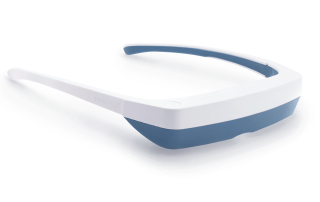
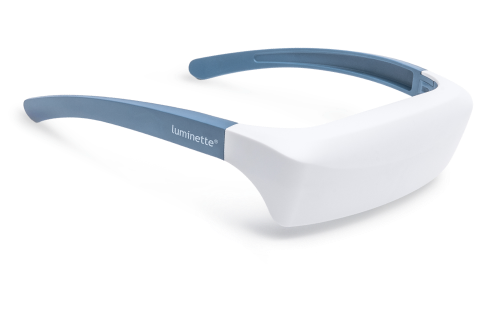
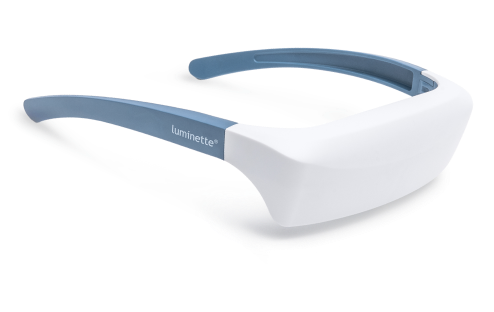
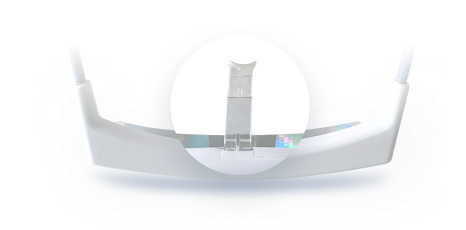
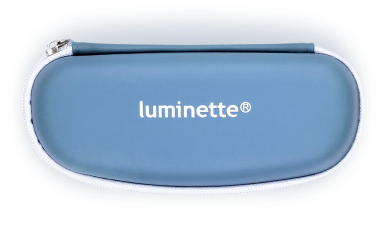
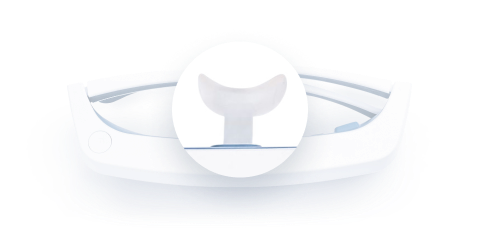
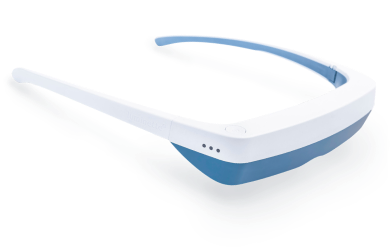
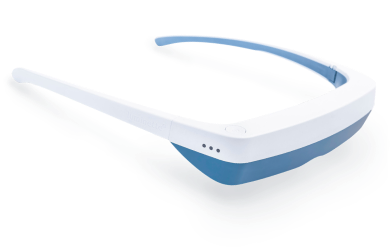
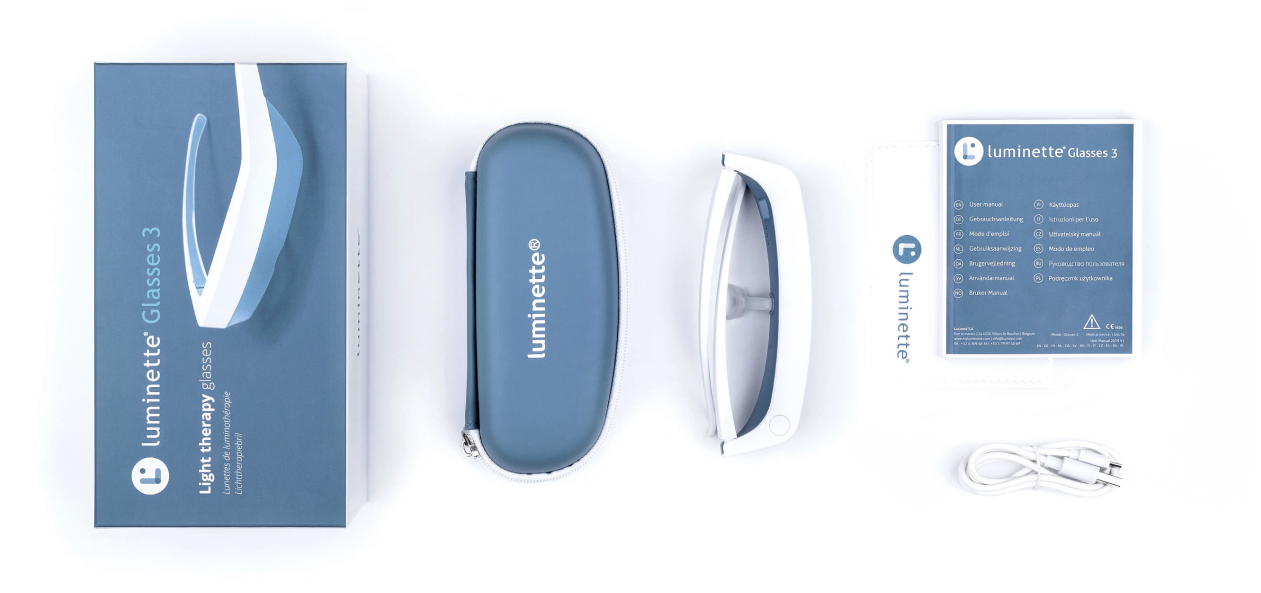
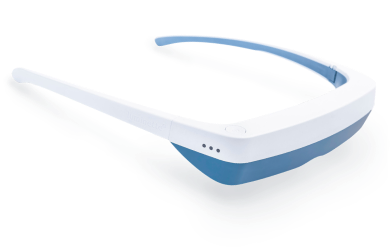
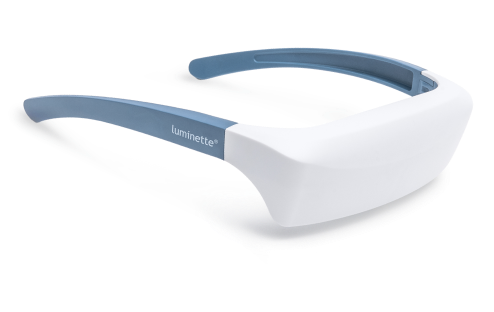
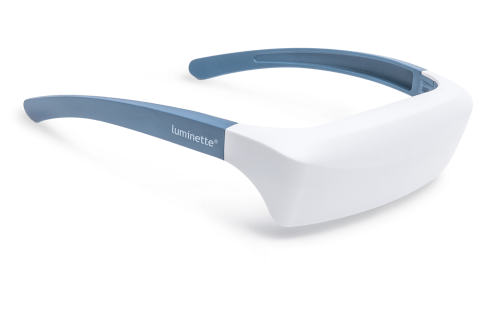
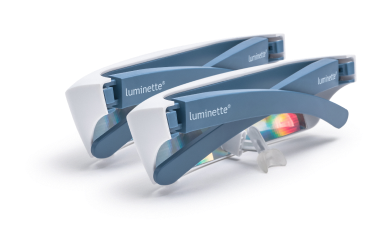
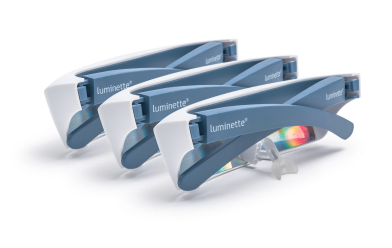
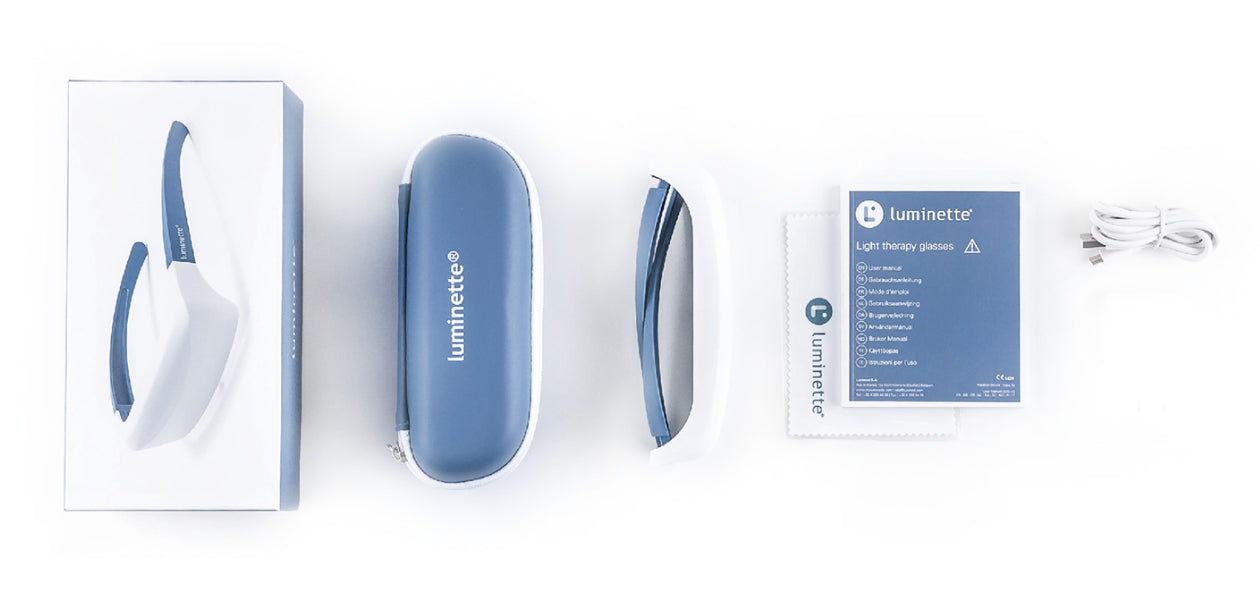
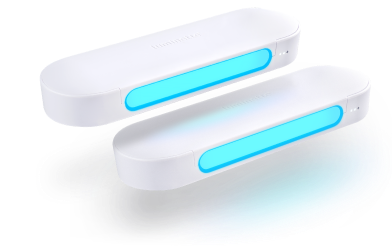
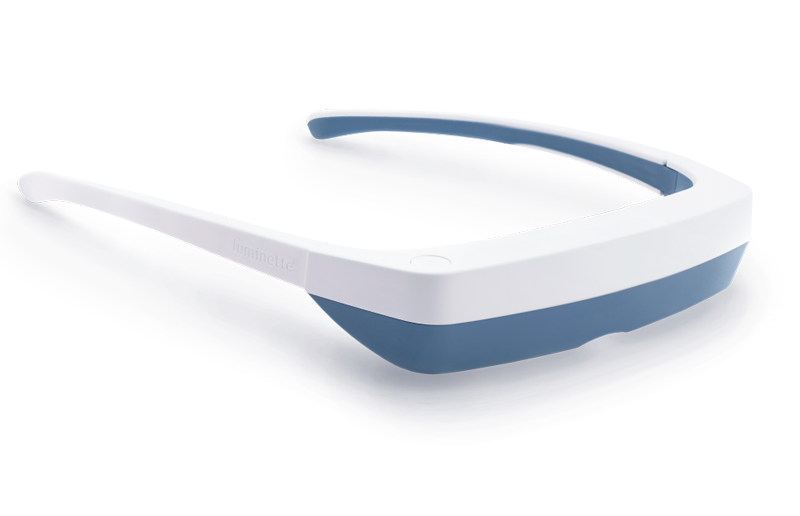
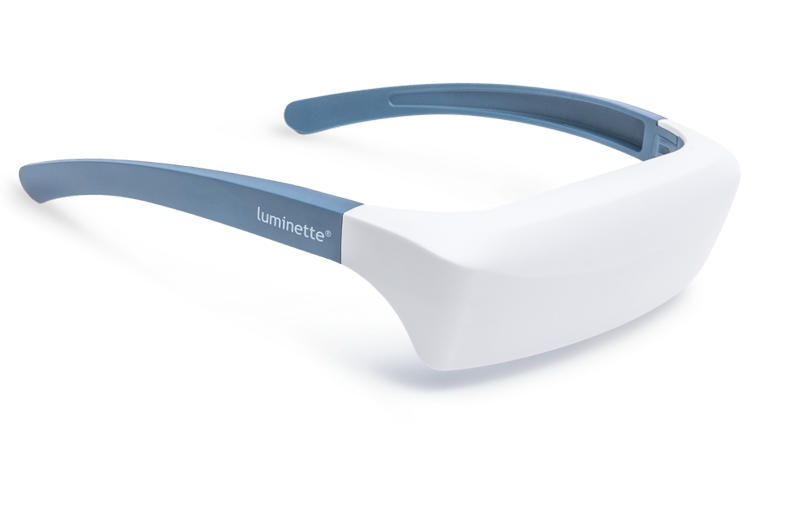
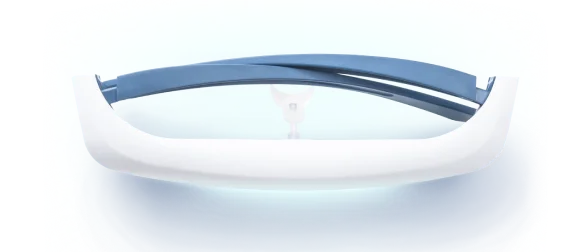
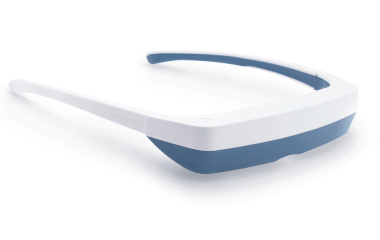
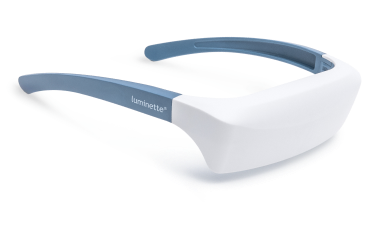
Luminette approached this differently. Their devices deliver the required intensity directly at eye level while you go about your morning - no sitting still required. The Luminette 3, specifically, is a pair of wearable light therapy glasses that you put on while making breakfast, getting dressed, or doing whatever your morning already involves. The light reaches your eyes continuously, which means the session happens in the background rather than taking over 20–30 minutes of your morning.
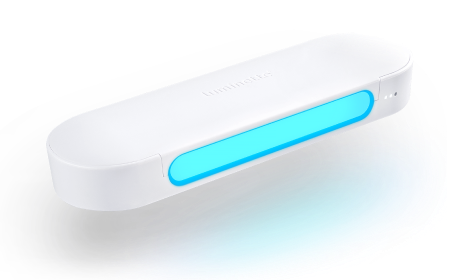
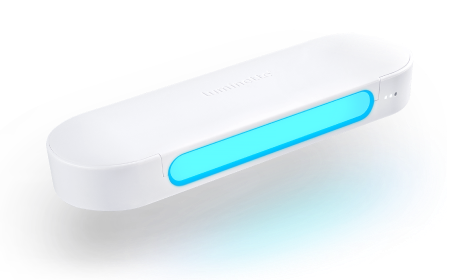
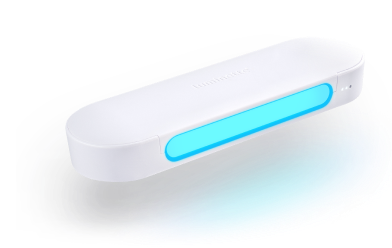
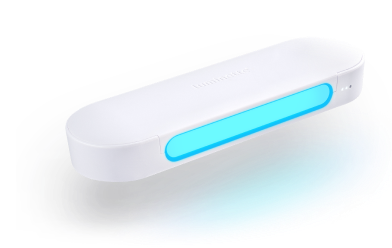
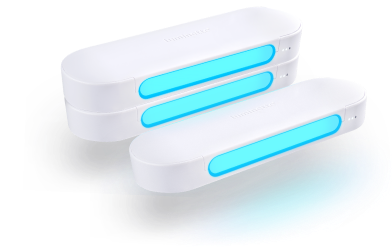
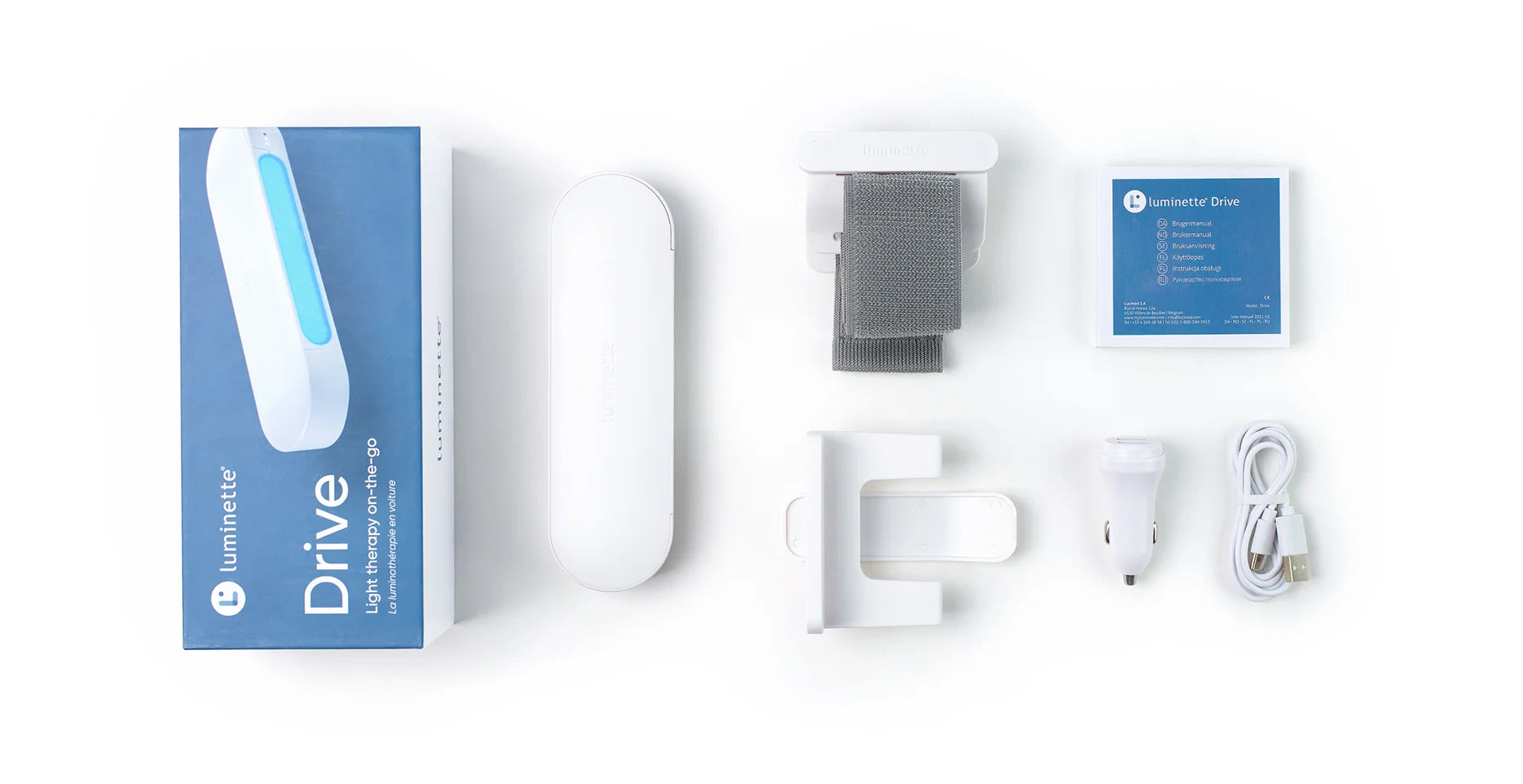
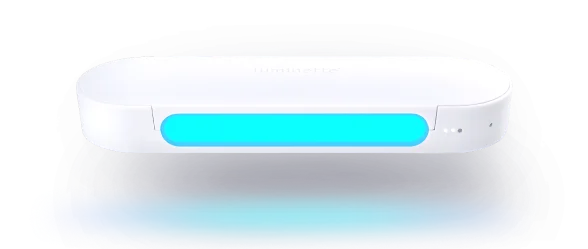
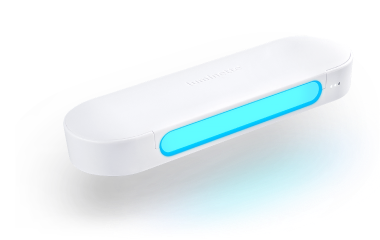
For people who've tried stationary lamps and abandoned them, the wearable format often makes the difference between something that works and something that doesn't get used. Luminette also offers a lamp for people who prefer the traditional format - the choice depends on what your mornings actually look like, not what you think they should look like.
Building a Routine Around the Right Device
For skincare-focused blue light therapy, consistency matters more than any individual session. The research that exists on blue light for acne tends to involve repeated sessions over several weeks - not one-off treatments. If you're buying a mask or handheld device, build in a realistic expectation: results, if they come, usually require daily or near-daily use over a meaningful stretch of time.
A few practical points before buying:
Wavelength matters. Not every device sold as "blue light therapy" emits at the wavelengths that have been studied. Look for devices that specify their nanometer output rather than just saying "blue LED."
Intensity varies. A device that looks bright isn't necessarily powerful enough to produce a therapeutic effect at your skin's surface. This is harder to evaluate without third-party data, which is why brand reputation and published specifications matter.
Skin type considerations exist. People with photosensitive skin conditions or who are on medications that increase light sensitivity should check with a dermatologist before starting any LED treatment routine - including blue light devices.
Cost scales with quality, but not always proportionally. There are inexpensive masks that perform adequately for home use and expensive devices that aren't meaningfully better. Reading reviews that include before-and-after comparisons and consistent use data is more useful than comparing price tags.
FAQ
In the skincare context, they're primarily used for acne management - targeting bacteria on the skin's surface through a photochemical process. Some people also use them as part of broader light-based skincare routines, sometimes alongside red light for combined surface and deeper tissue effects. They are not mood or energy treatments; that's a different technology entirely.
The evidence is mixed but not absent. Studies show that consistent use of blue light at the appropriate wavelength can reduce inflammatory acne lesions over time. Results vary depending on acne type, severity, skin tone, and how consistently the device is used. It's not a standalone solution for most people - it works best as part of a broader skincare approach, and anyone with active or severe acne should involve a dermatologist rather than relying solely on home devices.
Blue light targets the skin surface - primarily useful for acne-related bacteria. Red and near-infrared light penetrates deeper, affecting tissue in ways studied for collagen support, skin texture, and muscle recovery. They're used for different things, and some devices combine both. Neither type is a substitute for bright light therapy, which is a separate category aimed at mood, energy, and circadian regulation.
No - and this is worth being clear about. Skincare devices direct blue light at your skin. Circadian research involves blue-enriched light reaching the retina at high intensity. The wavelengths may overlap partially, but the application, geometry, and intent are completely different. A face mask won't reset your body clock. If that's what you're trying to do, look at dedicated bright light therapy devices - Luminette's light therapy glasses are one option built specifically around that use case.
Home devices range from around $30 for basic handheld units to several hundred dollars for higher-end masks with multiple wavelength modes. Professional clinic treatments exist too but are significantly more expensive per session. For most home users, a mid-range device used consistently will outperform an expensive device used sporadically. Build the routine first, then invest in equipment that matches it.


